
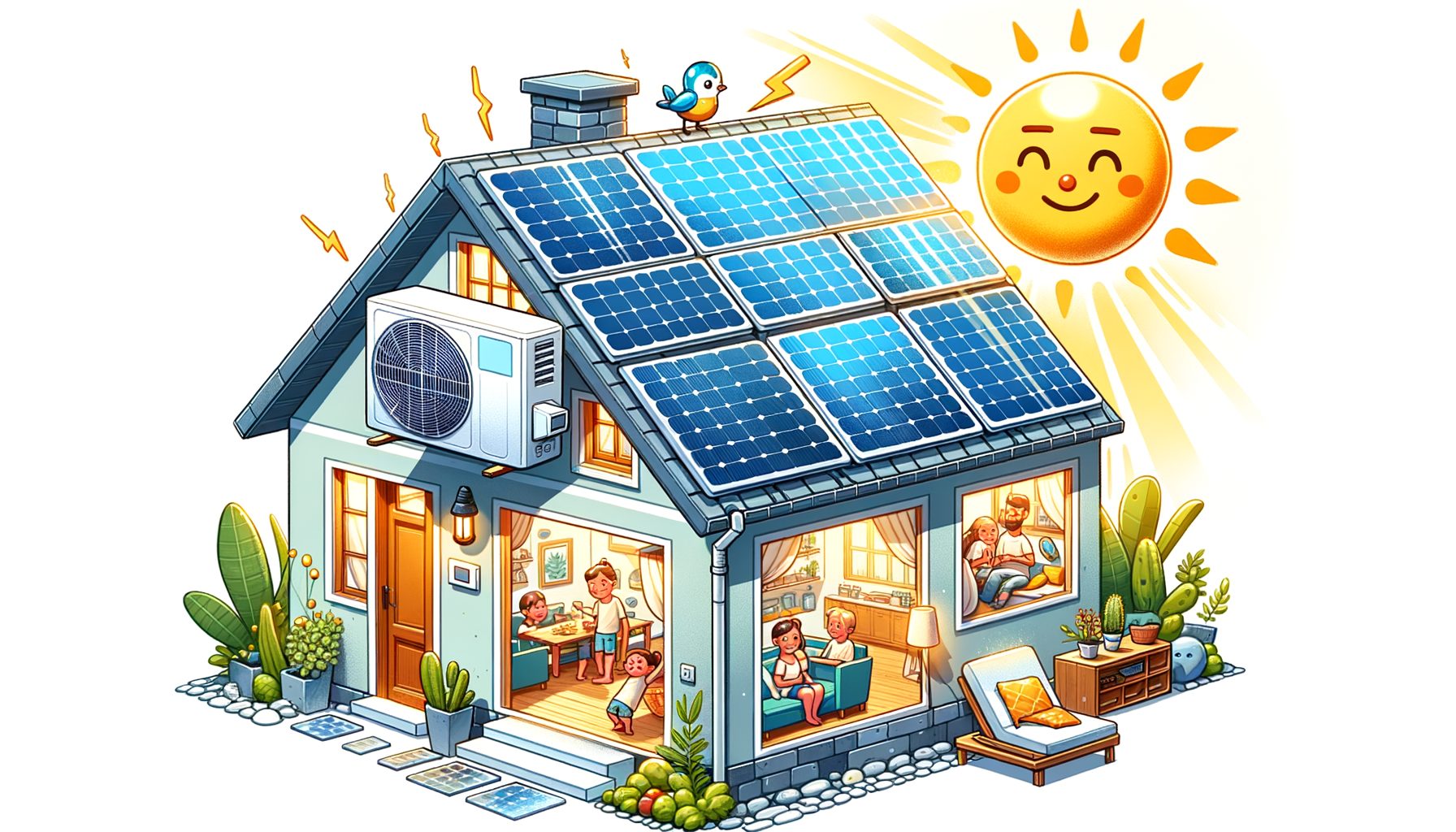
Summer heat keeps climbing, energy bills are spiking, and power grids are straining under record demand. No wonder more homeowners are turning to solar-powered air conditioners as a smart, future-ready way to stay cool. In short, solar AC lets your cooling run on sunshine—slashing electricity costs and emissions while building resilience during heat waves. Curious about whether solar AC pays off, how it operates, and what the real-world benefits look like in dollars, comfort, and reliability? You’ll find clear, practical answers here, backed by data you can use.
The Real Problem: Heat, High Bills, and Grid Stress
Heat waves are growing longer and hotter, and global cooling demand is surging. The International Energy Agency estimates that air conditioners and electric fans already consume nearly 20% of building electricity worldwide, with demand potentially tripling by 2050 without efficiency and clean energy. That dynamic pushes household utility bills higher and strains grids right when you need cooling most. If you live in a hot or humid region, you know the reality: during peak season, AC can swallow 30–50% of your home’s electricity use.
Grid reliability is also wobbling. Summer brownouts and blackouts aren’t just inconvenient—they pose risks to health, food storage, and electronics. In many places, traditional AC still draws heavily from fossil-fueled electricity, raising emissions while we’re adapting to hotter weather. The trade-off has felt stark: pay more to stay cool, or cut usage and endure the heat.
Solar-powered air conditioners change the equation. Pair efficient AC with on-site solar—and optionally a battery—and you can offset large chunks of cooling energy with clean power, reduce peak-hour costs, and gain backup potential. Some homeowners prefer hybrid solar AC that automatically toggles between solar and the grid (or a battery). Others choose fully DC solar units that run directly from panels and storage. Either way, the goal stays the same: cool your home with the most abundant energy source around, harvested from your roof or yard. For homeowners, it isn’t just about “going green.” It’s a pragmatic path to lower bills, predictable costs, and a home prepared for hotter summers and grid volatility.
How Solar-Powered AC Works: Panels, Inverters, and Smart Efficiency
At a high level, solar-powered AC couples photovoltaic (PV) panels with a high-efficiency air conditioner and power electronics that steer energy where it’s needed. Panels produce DC electricity during daylight. That DC can feed a dedicated DC solar air conditioner directly, or it can be inverted to AC and used by a standard high-efficiency split or central unit. Many households opt for hybrid solar AC: solar power gets priority, while the system seamlessly draws from a battery or the grid as clouds pass or demand spikes.
Here’s what a typical setup includes:
– Solar panels sized to cover a portion—or most—of your cooling load.
– A high-efficiency air conditioner, often an inverter-driven variable-speed unit with a high SEER (Seasonal Energy Efficiency Ratio) rating to cut electricity per unit of cooling.
– Power electronics: either a dedicated DC controller for DC solar AC or a standard grid-tied inverter. Microinverters or power optimizers can boost output when panels face partial shade.
– Optional battery storage to capture extra solar for evening peaks or short outages.
In hybrid configurations, smart controls prioritize energy: solar first, then battery (if installed), and finally the grid. Fully DC systems can achieve standout efficiency by avoiding multiple DC-AC conversions; however, they require careful panel matching and power conditioning to run smoothly under changing sunlight.
Performance in the real world hinges on both solar and HVAC efficiency. A modern inverter mini-split rated SEER 20–25 can trim electricity use by 30–50% versus older units. Add 2–5 kW of rooftop solar, and a large share of daytime cooling—often the costliest hours on time-of-use tariffs—can be offset. A smart thermostat can pre-cool when the sun is strong and let the system coast through late afternoon with less compressor work. The upshot: a clean, intelligent setup that flattens your demand curve and saves money when it matters most.
Key Benefits You’ll Notice at Home: Savings, Comfort, and Resilience
– Lower, more predictable bills: In many regions, residential electricity runs $0.12–$0.30 per kWh. A typical 1.5–2.5-ton inverter AC may draw 1–2 kW while operating. Over a hot season, that can total 1,000–2,500 kWh just for cooling. With solar offsetting 40–100% of that usage during sunny hours, bill reductions can be substantial—especially under time-of-use rates where midafternoon prices spike. If net metering or export credits are available, surplus generation outside peak cooling hours can further reduce costs.
– Comfort you can count on: Variable-speed, solar-ready systems modulate output to match real-time needs, keeping temperatures steadier and managing humidity better. Pre-cooling powered by your own PV elevates comfort without punishing your wallet.
– Resilience during heat waves: Pair a 5–15 kWh battery with a suitably sized array and you can keep cooling through short outages—vital for families with young children, older adults, or health concerns. Full off-grid cooling over extended periods demands careful sizing, but even partial backup makes emergencies safer and less stressful.
– Lower carbon footprint: Depending on your local grid, each kWh avoided prevents roughly 0.3–0.7 kg of CO2. Replacing grid-powered cooling with solar delivers a direct, measurable emissions cut. The International Energy Agency highlights high-efficiency AC plus clean electricity as a leading strategy to meet rising cooling demand sustainably.
– Quiet, future-ready tech: Many solar-optimized mini-splits run whisper-quiet and offer app control, geofencing, and scheduling. Those features make it easy to time cooling around sunny hours, minimize waste, and track performance. You also establish a home energy platform ready for EV charging, heat pumps for heating, or electric water heating.
– Better return as energy prices rise: As electricity costs climb, payback on solar and efficient cooling generally improves. Incentives—tax credits, rebates, low-interest loans—can shorten payback and boost ROI. Even modest tariff changes matter; shifting just two hours of daily peak cooling to solar over a summer can save hundreds annually in high-cost regions.
Most importantly, these advantages compound: efficiency shrinks the energy you need, solar supplies clean power for that leaner demand, and smart controls time usage for maximum effect. Together they deliver bigger savings, better comfort, and a home ready for hotter summers.
Costs, Payback, Incentives, and What the Numbers Say
Costs vary by country, brand, installer, and roof conditions. Use these ranges as a planning baseline:
– Solar PV: In mature markets, installed costs often land between $2.00–$3.50 per watt (before incentives). A 4 kW system might cost $8,000–$14,000 pre-incentive; after a 30% tax credit (where available), $5,600–$9,800.
– Solar-ready AC: High-efficiency inverter mini-splits typically run $1,800–$5,000 per zone installed, depending on capacity and features. Hybrid solar AC and DC solar AC units often range $2,000–$5,000 for common residential capacities, excluding PV.
– Battery storage: Installed costs commonly range $800–$1,200 per kWh. A 10 kWh system would be roughly $8,000–$12,000 before incentives.
Payback depends on sun exposure, electricity rates, incentives, and how much AC load you shift to solar. In sunny areas with higher rates and supportive policies, combining solar with high-efficiency AC can pay back in 5–10 years—sometimes faster if replacing an aging, inefficient unit. In lower-cost electricity markets, payback may stretch, yet resilience and environmental gains still carry weight for many homeowners.
Here’s a simplified snapshot to ground the numbers:
| Item | Typical Range | Notes |
|---|---|---|
| PV System Size for AC Offset | 2–5 kW | Offsets a significant share of daytime cooling in many climates |
| PV Installed Cost (pre-incentive) | $4,000–$17,500 | At $2.00–$3.50/W; varies by market and roof complexity |
| High-Efficiency AC Upgrade | $1,800–$5,000 | Per zone; central systems vary by tonnage and ductwork |
| Battery Storage (optional) | $8,000–$12,000 (10 kWh) | Improves resilience and peak shifting |
| Annual Cooling Use (typical) | 1,000–2,500 kWh | Wide variation by climate, home size, insulation |
| CO2 Avoided | 300–1,500 kg/year | Assumes 0.3–0.6 kg CO2/kWh displaced |
Incentives can be a game-changer. Many countries and regions offer tax credits, rebates, VAT reductions, or low-interest financing for solar and efficient HVAC. Net metering or feed-in tariffs may pay for excess generation. Always check current policies with your local energy agency or utility; rules evolve. A professional site assessment will right-size your system, account for roof conditions, and model payback using local irradiance and rate structures.
For data-driven planning, look to trusted sources: cost benchmarks from marketplaces and national labs, efficiency ratings from ENERGY STAR, and cooling demand insights from international agencies. Those references help you convert headline benefits into projections tailored to your home and climate.
Step-by-Step: How to Choose and Install the Right System
1) Start with an energy audit: Before buying equipment, cut the load. Seal air leaks, add insulation, and consider reflective window films or shading. By lowering the load, you can install a smaller, cheaper AC and fewer panels for the same comfort. In most homes, that’s the best ROI.
2) Size for your climate and lifestyle: Work with a qualified HVAC pro to size the AC using recognized methods (like Manual J in North America). A reputable solar installer will analyze historical usage, roof orientation, and shading to recommend a right-sized array. If cooling is the main target, a 2–5 kW system focused on daytime offset can be highly effective.
3) Choose the technology path: Three common options exist. a) Keep your high-efficiency AC (or upgrade to SEER 20+) and add rooftop solar with a standard inverter—simple and flexible. b) Install a hybrid solar AC that prioritizes PV and switches smoothly to the grid as needed—great for targeted zones or additions. c) Go with a dedicated DC solar air conditioner—very efficient, but best handled by installers experienced with DC systems and precise PV sizing.
4) Consider a battery for resilience: If outages or high evening rates are common, a 5–15 kWh battery can keep cooling during short blackouts and move solar energy into expensive time-of-use windows. Pair storage with a smart thermostat to enable pre-cooling and demand management without sacrificing comfort.
/P>5) Verify incentives and interconnection: Ask your installer about tax credits, rebates, or net metering and start the paperwork early. Confirm interconnection requirements and any smart meter needs with your utility. Clear policies improve payback and streamline commissioning.
6) Plan smart controls and maintenance: Use a connected thermostat, align schedules with sun hours, and monitor performance through your inverter app. Maintain panels (periodic cleaning in dusty areas) and replace AC filters regularly. A quick annual checkup catches issues early and protects efficiency and warranties.
7) Get multiple quotes and read the fine print: Compare equipment specs (SEER/EER/HSPF for heat pumps), warranties (10–12 years on compressors is common), and installer reputation. Request production and savings estimates based on your roof and climate, not generic figures. The most reliable systems are sized and installed by pros who stand behind their work.
FAQs
Do solar-powered air conditioners work on cloudy days? Yes. Hybrid systems automatically draw from the grid or a battery when solar output dips. Dedicated DC units may require sufficient panel input, though many include controllers that stabilize operation under variable sun. Adding a small battery smooths performance and extends runtime.
Will a solar AC cool my whole house? It depends on capacity and layout. Many homeowners begin with a high-efficiency mini-split for the most-used rooms and add zones over time. Whole-home central systems can also run on rooftop solar; proper sizing and strong efficiency are the keys.
How much can I really save? In sunny regions with moderate-to-high electricity prices, offsetting daytime AC loads can cut annual bills by hundreds of dollars. Savings grow with higher rates, time-of-use pricing, and smart controls. Incentives improve payback further.
Is maintenance complicated? Not typically. Keep panels clear of heavy debris or dust, change AC filters regularly, and schedule annual inspections. Most modern systems offer app-based monitoring so you can spot issues early.
Can I add solar AC to an existing solar array? Often, yes. If your array has spare capacity or can be expanded, a high-efficiency AC can run on the same inverter system. Check inverter sizing, breaker capacity, and local interconnection rules before proceeding.
Conclusion
Here’s the bottom line: pairing efficient cooling with on-site solar addresses today’s biggest home-energy challenges—rising bills, shaky grids, and climate-driven heat. Solar-powered AC delivers steadier comfort, cleaner air, lower and more predictable costs, and real resilience when the grid is stressed. With right-sized equipment, smart controls, and available incentives, the hottest hours of the day can become your most affordable ones.
Ready to go from research to action? Start with an energy audit to trim waste, then collect two or three quotes from reputable solar and HVAC installers. Ask for a right-sized design, a clear savings model based on your local rates, and written warranty terms. If outages worry you, request a battery-ready plan so storage can be added now or later. Use smart thermostats to pre-cool during peak sun, track inverter production, and tune setpoints for comfort and savings. In many markets, incentives and time-of-use pricing make these steps even more valuable, accelerating payback while boosting comfort and climate resilience.
The transition to cleaner, smarter cooling isn’t only about technology—it’s about control, confidence, and a healthier home. Every kilowatt-hour shifted to solar steadies your budget and lightens your footprint. Start small with one efficient mini-split and a modest PV array, or go all-in with a hybrid system and storage. Either route invests in comfort that pays you back. If you’re ready to cool your home with sunshine, book a site assessment and compare options—you may be surprised how quickly the numbers add up. Your coolest summer yet can start now. Which room would you love to make perfectly comfortable first?
Helpful resources:
– International Energy Agency, The Future of Cooling: https://www.iea.org/reports/the-future-of-cooling
– U.S. Department of Energy, Solar Energy Basics: https://www.energy.gov/energysaver/solar
– ENERGY STAR, Air Conditioner Efficiency Guidance: https://www.energystar.gov/products/air_conditioners
– EnergySage, Cost of Solar Guide: https://www.energysage.com/solar/cost-of-solar/
– U.S. EIA, Electricity Data and Prices: https://www.eia.gov/electricity/monthly/
– U.S. EPA, eGRID Emissions Factors: https://www.epa.gov/egrid
Sources:
– International Energy Agency (IEA), The Future of Cooling.
– U.S. Department of Energy (DOE), Energy Saver – Solar Energy.
– ENERGY STAR, Residential Air Conditioning Specifications.
– EnergySage, Solar Cost Benchmarks and Market Data.
– U.S. Energy Information Administration (EIA), Retail Electricity Prices.
– U.S. Environmental Protection Agency (EPA), eGRID Emissions Factors.