
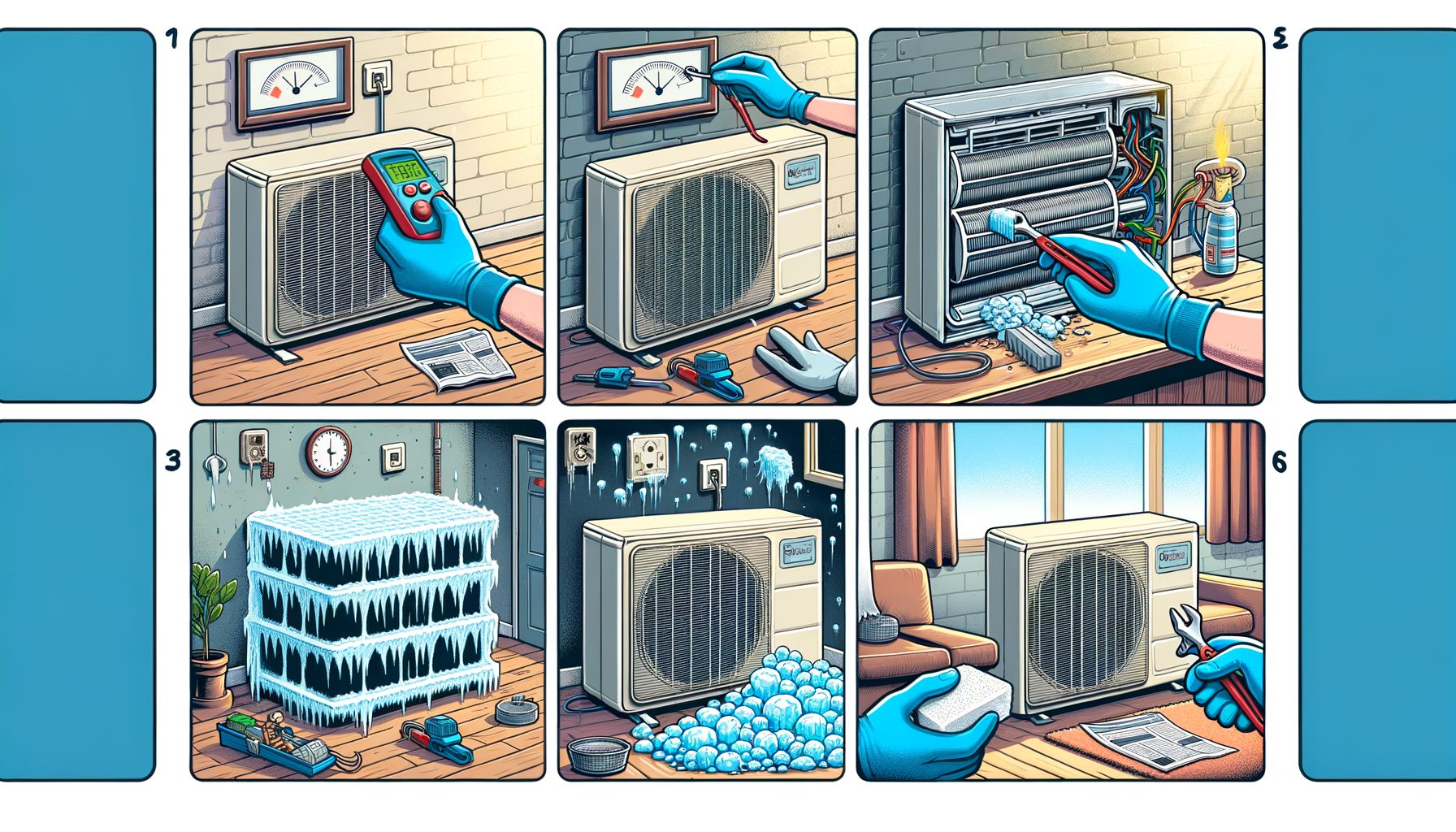
If your air conditioner suddenly stops cooling and you spot ice on the indoor unit, you’re dealing with an air conditioner frozen coil. It feels urgent—your home is hot, energy bills are climbing, and the system might be at risk of damage. The good news: most freeze-ups come from a few fixable issues. In this guide, you’ll learn why coils freeze, how to defrost them safely, and what to adjust so it doesn’t happen again. Keep reading for clear steps, real-world tips, and a quick reference table that shows when to DIY and when to call a pro.
Why AC coils freeze in the first place (and how to spot the cause)
Frozen evaporator coils occur when coil temperature drops below 32°F (0°C) and moisture in the air turns to ice. That ice blocks airflow, which makes the coil even colder—creating a snowball effect. Three culprits stand out: restricted airflow, refrigerant problems, and high indoor humidity or drainage issues. Get the cause right, and you won’t be repeating the same fix every week.
Airflow restrictions top the list. A clogged filter, closed supply registers, blocked return vents, dirty evaporator fins, or a struggling blower motor all reduce the warm indoor air passing over the coil. With less heat being transferred, the coil runs colder and eventually ices up. Swapping to a higher-MERV filter without checking static pressure can accidentally choke airflow, too.
Next comes refrigerant. When pressure is low (often from a leak), the coil’s saturation temperature drops and freezing becomes likely. Telltale signs include thin, even frost starting at the indoor coil, hissing or gurgling noises, and longer run times with lousy cooling. Unlike airflow tweaks, refrigerant work isn’t a DIY task—handling it requires certification in many regions.
Humidity and condensate management play a role as well. In muggy weather, the system pulls lots of water from the air; if the drain line clogs or the pan overflows, water can back up and freeze on the coil. Oversized systems that short-cycle don’t dehumidify well, raising indoor moisture and increasing freeze risk. Ice that forms mostly overnight—when outdoor temperatures dip but humidity stays high—also points in this direction.
Quick clues: A filthy filter or recently moved furniture blocking returns suggests airflow. Oil residue on refrigerant lines or a history of adding refrigerant suggests a leak. Gurgling plus water around the air handler? Check drainage. A correct diagnosis saves time and avoids repeat failures.
Immediate fix: How to safely defrost a frozen AC coil (step-by-step)
Before doing anything else, protect the equipment. Ice can bend coil fins, burn out the compressor, and flood the air handler once it melts. Follow the sequence below to defrost and restart safely.
1) Turn cooling OFF at the thermostat. Switch the fan setting to ON. Doing so circulates room-temperature air to melt ice gently. Resist the temptation to chip away ice—fins are delicate and expensive to repair.
2) Open all supply registers and make sure return vents aren’t covered by rugs or furniture. Better airflow speeds up defrosting.
3) Replace or temporarily remove an extremely clogged filter. If you remove it, install a new filter before restarting cooling. The system should not be run long-term without a filter.
4) Check the condensate drain. If you have a wet-dry vacuum, suction the outside drain line for 1–2 minutes to clear clogs. A cup of distilled vinegar followed by water can help clean algae in many PVC drains. Empty any float switch pan and confirm the float moves freely.
5) Wait for the coil to fully defrost. Depending on ice thickness, the thaw may take 2–24 hours. A box fan aimed near the air handler access panel can accelerate melting. Do not use heat guns; gentle airflow is safest.
6) Inspect for obvious issues. Look for collapsed duct sections, disconnected flex duct, or a blower wheel caked with dust. Note any abnormal noises.
7) Restart with a test cycle. Set the thermostat to COOL and target about 74–76°F (23–24°C) initially so the system doesn’t immediately run at full tilt. After 10–15 minutes, measure supply vs. return temperature (Delta T). A healthy system usually shows a 16–22°F (9–12°C) drop. If airflow is good and Delta T is normal, the immediate cause was likely addressed.
If ice returns within hours—or the compressor short-cycles or trips—shut it off and schedule a professional inspection. Rapid re-icing often points to low refrigerant pressure or significant upstream airflow problems (like a failing blower motor or a coil that needs a deep clean).
Prevent repeat freeze-ups: Airflow, filters, cleaning, and smarter settings
Most frozen-coil calls trace back to airflow. Begin with your filter strategy. Choose a filter that balances capture efficiency with low pressure drop. High-MERV filters can be great for allergies, but resistance rises; if your system wasn’t designed for it, a thicker media filter (e.g., 4–5 inches) or an ECM blower adjustment may be needed to maintain airflow. Replace filters on schedule—or sooner in dusty homes, with pets, or during renovation.
Then verify registers and returns. Keep all supply registers at least 80–100% open unless a pro has balanced your system. Clear returns of obstructions and vacuum grills monthly. If a room stays stuffy, inspect for a crushed duct and confirm the damper is open.
Cleaning helps, too. If you can access the evaporator coil, a light brushing and HVAC-approved cleaner can restore fin efficiency. Because fin damage is easy, many homeowners schedule professional coil cleaning every 2–3 years, especially in humid or dusty climates. Likewise, a blower wheel packed with lint acts like a speed limiter—cleaning restores airflow and capacity.
Thermostat habits matter. Avoid frequent temperature swings and deep setbacks during peak humidity. Large, sudden drops (e.g., 80°F to 68°F/27°C to 20°C) can force long runtimes and encourage icing when airflow is marginal. Smart thermostats with dehumidification support or staged cooling smooth runtimes and reduce overshoot. Set fan mode to AUTO in humid seasons; continuous fan ON can sometimes re-evaporate moisture from a wet coil back into the home, which confuses humidity control, though it helps defrost during a freeze event.
Finally, manage humidity and drainage. Aim for indoor relative humidity of 40–55%. Use bathroom and kitchen exhaust fans, fix building leaks, and consider a whole-home dehumidifier in coastal or tropical climates. Keep the condensate drain clear by pouring a cup of vinegar into the drain access every 1–2 months during the cooling season.
Helpful quick facts:
| Item | Typical Range/Guideline | Why It Matters |
|---|---|---|
| Filter change interval | 1–3 months (1-inch), 3–6 months (4–5 inch) | Prevents airflow drop that leads to coil freezing |
| Indoor RH target | 40–55% | Lower humidity reduces icing risk and mold |
| Normal AC Delta T | 16–22°F (9–12°C) | Quick indicator of airflow and charge health |
| Coil surface temp | ~40–50°F (4–10°C) | Below 32°F (0°C) invites ice formation |
Refrigerant, leaks, and the line between DIY and pro service
When airflow and drainage checks don’t solve it, refrigerant issues move to the top of the list. A low charge from a leak reduces evaporating pressure—dropping coil temperature into freezing territory even with perfect airflow. You might notice longer cycles, lukewarm vents, hissing at the indoor unit, or frost creeping along the refrigerant line set. On mild days it may still cool, yet it tends to freeze during hotter, humid afternoons when load increases.
Refrigerant handling is regulated in many countries. Diagnosing low charge with gauges, calculating superheat/subcooling, and repairing leaks require specialized tools and certification. A licensed technician will pressure test, locate leaks (often at flare fittings, Schrader cores, or hairline cracks in coils), repair or replace components, evacuate the system to remove moisture, and recharge to manufacturer specs. Simply “topping up” without fixing the leak is a temporary patch that raises costs and environmental impact.
Know when to stop DIY: If the coil re-freezes within a day after a full defrost and a clean filter; if the outdoor unit’s fan or compressor short-cycles or trips breakers; if you see oily residue on line sets or at service valves; or if Delta T is high but airflow is clearly good, call a pro. Those patterns point to charge, metering device, or control faults—areas where guesswork can damage the compressor.
Preventive professional care pays off. An annual tune-up that includes checking static pressure, cleaning the blower, measuring superheat/subcooling, testing the condensate safety switch, and verifying thermostat calibration can dramatically cut freeze-ups. If your system is older or uses a phased-out refrigerant, discuss retrofit options. In hot-humid regions, upgrades like variable-speed air handlers or enhanced dehumidification controls help keep coil temperatures stable while managing moisture.
Bottom line: DIY steps can solve many frozen coil events, but persistent freezing or signs of a leak signal it’s time to schedule an HVAC technician. Proper diagnostics protect your compressor and restore efficiency.
FAQs: quick answers to common frozen-coil questions
Q1: How long does it take to defrost a frozen AC coil?
Most light icing melts within 2–6 hours with the system set to FAN ON and COOL OFF. Heavy ice can take up to 24 hours. Use a box fan to boost airflow. Do not chip or heat the coil—fins bend easily and heat can warp plastic parts.
Q2: Can a dirty filter really freeze my AC?
Yes. A clogged filter reduces airflow, lowering the coil’s temperature below freezing. Change 1-inch filters every 1–3 months (sooner with pets, dust, or construction) and consider a thicker media filter for the same MERV rating with less pressure drop.
Q3: Is low refrigerant always the problem?
No. Many freeze-ups are purely airflow or drainage related. However, if icing returns quickly after a full defrost and filter change—or you see frost along the refrigerant line—low charge from a leak is likely. That requires professional testing and repair.
Q4: Should I leave the fan ON all the time?
During a freeze event, FAN ON helps defrost. Day-to-day, AUTO is usually best in humid seasons so moisture doesn’t re-evaporate into the home. Some modern systems use low-speed continuous fan with humidity control effectively—follow the manufacturer’s guidance.
Q5: What maintenance prevents frozen coils?
Replace filters on schedule, keep registers and returns open, clean the condensate drain every 1–2 months, have coils and the blower cleaned as needed, and get annual professional checks of static pressure, superheat/subcooling, and safety switches.
Conclusion: get cool again—and keep it that way
Here’s the short version: An air conditioner frozen coil almost always comes down to airflow, refrigerant, or moisture management. Start by defrosting safely: turn COOL off, set FAN to ON, and clear any filter and drain issues. Then optimize airflow—use the right filter, open registers and returns, and keep coils and the blower clean. If icing returns, call a licensed HVAC technician to test for leaks, verify charge, and tune performance.
Take action today. Replace your filter if it’s past its prime, vacuum return grills, and pour a cup of vinegar into the condensate drain. Set your thermostat to a steady, realistic temperature during humid days. If you’ve had more than one freeze-up this season—or you see oil around the line set—book a professional inspection before the next heat wave. A one-hour visit now can save a compressor and slash your energy bill for the rest of the summer.
Cooling should be comfortable, reliable, and efficient. With a few simple checks and smarter settings, most freeze-ups can be prevented and system life extended. Ready to go deeper? Ask your tech about improving static pressure, installing a higher-capacity media filter, or adding humidity control to your thermostat. The goal isn’t just to stop ice today—it’s to build a system that stays steady under real-world conditions.
Stay cool, protect your equipment, and reclaim your comfort. What’s the first small step you’ll take right now—checking the filter, clearing a vent, or scheduling a tune-up?
Sources and further reading:
– U.S. Department of Energy – Air Conditioning Tips: https://www.energy.gov/energysaver/central-air-conditioning
– ENERGY STAR – Air Filter Guidance: https://www.energystar.gov/campaign/heating_cooling/maintenance
– EPA – Refrigerant Management Regulations: https://www.epa.gov/section608
– ACCA (Air Conditioning Contractors of America) – Quality Installation/Manuals: https://www.acca.org/standards/technical-manuals
– CDC – Indoor Humidity and Comfort: https://www.cdc.gov/niosh/topics/indoorenv/temperature.html