
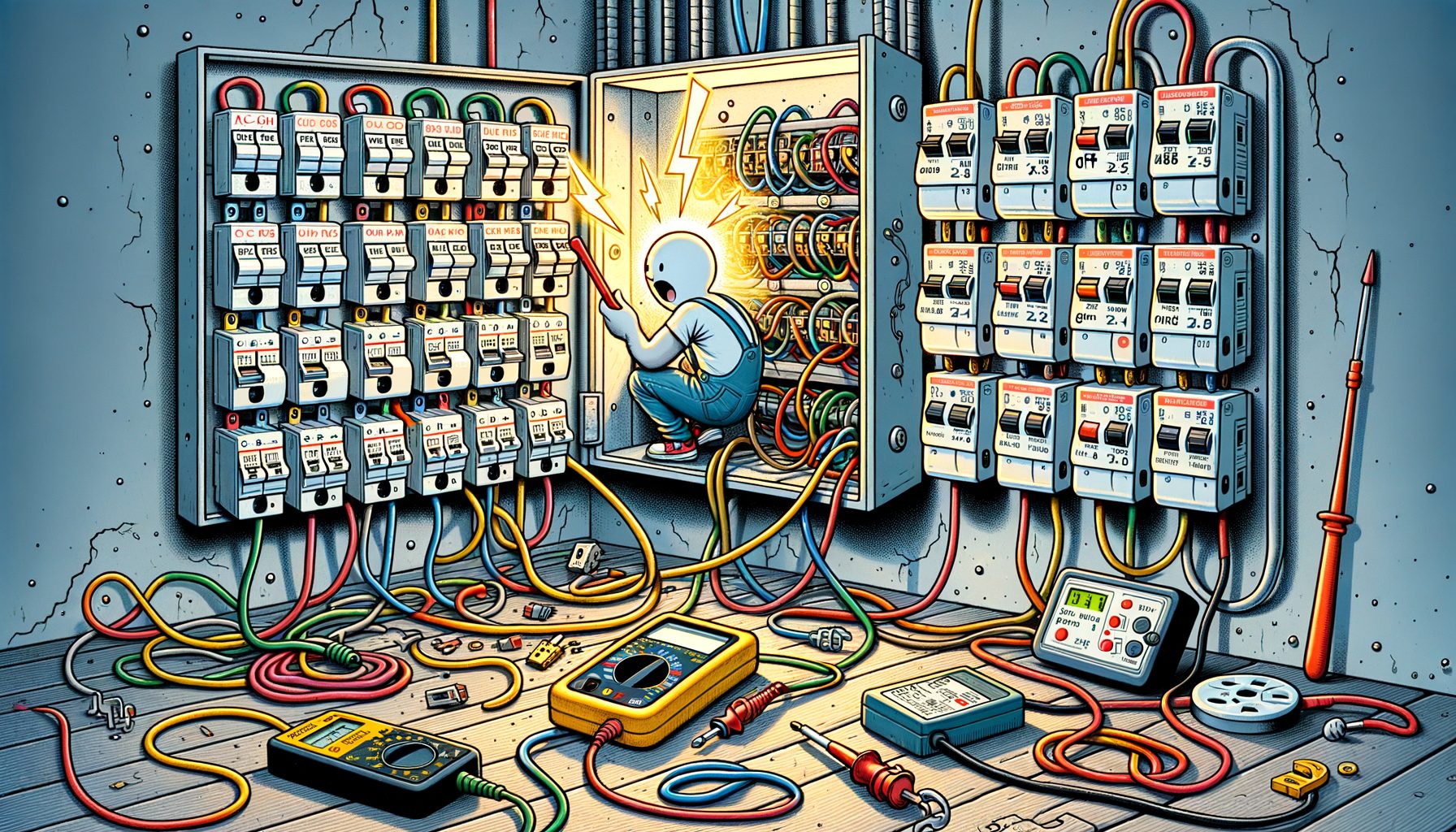
Why do AC circuit breakers trip at the most inconvenient moments—during a heat wave, a big gaming session, or right in the middle of cooking? If your breaker keeps flipping off, it’s doing its job: protecting you from overloads, short circuits, and dangerous faults. In this guide, you’ll learn why AC circuit breakers trip, how to troubleshoot quickly and safely, and which fixes actually stop repeat trips. Whether you’re a renter, homeowner, or small business operator, you’ll see what’s normal, what’s risky, and how to make your electrical system more reliable without guesswork.
The real reasons your AC circuit breakers trip
Breakers trip because too much current flows or because they detect a hazardous condition. The most common cause is an overload—drawing more power than the circuit and breaker are designed to handle. Think of running a space heater, air conditioner, hair dryer, and microwave on the same 15A or 20A branch. Heat builds in the wiring and the thermal element inside the breaker trips to prevent damage. Continuous loads (on for 3+ hours) are particularly stressful; most household breakers should only carry up to 80% of their rated current continuously (for example, 16A on a 20A breaker). If a breaker trips after a few minutes, suspect an overload. If it trips instantly, suspect a short circuit or ground fault.
Short circuits occur when the hot conductor contacts neutral or another phase with very low resistance—often due to damaged cords, crushed cable, or a failed device. The result is a surge of current that trips the breaker’s magnetic mechanism almost immediately. Ground faults happen when current leaks to ground (earth), for example through a wet outlet box, a damaged appliance chassis, or deteriorated insulation. Ground-fault circuit interrupters (GFCI) trip when they detect as little as 4–6 mA of leakage, long before a standard breaker would act. Arc-fault circuit interrupters (AFCI) look for signature “arcing” patterns from loose connections or damaged cords and trip to prevent fires.
Loose connections are a silent culprit. A loose neutral or hot at a receptacle, junction box, or breaker lug creates resistance that generates heat and intermittent arcing. The result can be nuisance tripping, scorched insulation, and unpredictable behavior when big appliances start. What’s interesting too, environmental heat plays a role: a warm electrical panel (from sun exposure, poor ventilation, or a crowded panelboard) derates breaker capacity. In hot climates or cramped enclosures, a circuit close to its limit will trip sooner than expected.
Motors and compressors (HVAC, refrigerators, pumps) add another layer: inrush current. When a motor starts, it can draw 3–7 times its running current for fractions of a second. If the circuit is already loaded, or if the breaker is old and tired, that split-second surge can trip it. Failing capacitors in air conditioners and heat pumps increase starting current and lead to repeated trips. Aging breakers themselves can become more sensitive due to wear, heat history, or internal mechanical fatigue. If a breaker trips with light loads or feels hot to the touch, replacement may be necessary after verifying the circuit is healthy.
Finally, shared circuits and bad load distribution are common in older buildings. A living room, bedroom, and outdoor outlet might all ride the same 15A branch. Add a heater, console, and a vacuum cleaner, and the math stops working. In small businesses, space heaters under desks and portable AC units regularly push general-purpose circuits into overload territory.
Well, here it is: quick reference for typical continuous load limits (80% rule)
| Breaker rating | Max typical continuous load | Common uses |
|---|---|---|
| 15A | 12A | Lighting, general outlets |
| 20A | 16A | Kitchen, laundry, small appliances |
| 30A | 24A | Dryer, water heater (some models) |
| 40A | 32A | Electric oven, large AC condenser |
Note: Always match breaker size to conductor size and device ratings. Local codes may vary by country.
Fast troubleshooting: what to check before you reset
Safety first: if you smell burning, see scorch marks, or hear crackling, keep the breaker OFF and call a licensed electrician. If it’s safe, use this logical flow to avoid guesswork and reduce repeat trips.
1) Identify what’s on the circuit. Look at what went dark when the breaker tripped—outlets, lights, and appliances. Unplug or switch off as many loads as possible, especially high-watt devices (heaters, AC, hair dryers, kettles, gaming PCs). If a large appliance is hardwired (like an HVAC condenser), turn off its local disconnect or thermostat.
2) Inspect cords and outlets. Check for damaged insulation, warm plugs, or discoloration. A crushed extension cord or a frayed appliance cord is a classic cause of short circuits and ground faults. If the breaker trips instantly after reset with everything unplugged, you likely have a wiring fault on that branch—stop and get a pro.
3) Reset correctly. Fully switch the breaker to OFF, press firmly, then back to ON. Many breakers won’t reset from a half-tripped position. If it won’t stay on with all loads disconnected, wiring or the breaker itself is suspect.
4) Reconnect loads one by one. Plug in or switch on devices one at a time, starting with the smallest loads. When the trip returns after a particular device is added, you’ve found a likely offender. The step-by-step approach is especially effective with space heaters, portable ACs, or older refrigerators. If a GFCI or AFCI breaker trips, pay attention to which device triggers it—an appliance with leakage current or a damaged cord will show up fast.
5) Watch for patterns and timing. Does it trip instantly (hint: short/ground fault), after a few minutes (overload/heat), or only on startup (motor inrush)? If the trip happens only on hot afternoons when the panel is warm, you’re near capacity or have ventilation issues. If it happens when the AC compressor kicks in, suspect a failing capacitor or an undersized circuit.
6) Simple tools help. An inexpensive plug-in power meter shows watts and amps for appliances, revealing overloads. A clamp meter (used by qualified people) can verify actual current versus breaker rating. An outlet tester can catch open grounds or reversed polarity (which can cause nuisance trips on protective devices). If available, a thermal camera or even a careful touch (on plastic cover only, not inside) can show warm outlets or cords—warm is okay under load, hot is not.
7) Check GFCI/AFCI devices. Press TEST and RESET on GFCI outlets to ensure they function and are not half-tripped. For AFCI breakers, repeated trips with no overload may indicate arcing from a loose connection at a receptacle—these require inspection and re-termination by a qualified person.
If you isolate the issue to a specific device, retire or repair it. If the circuit itself is the culprit—or you can’t keep the breaker on with no loads attached—stop troubleshooting and book an electrician. Repeated resets without a fix increase risk and can damage equipment.
Lasting fixes and prevention for homes and small businesses
1) Balance and reduce loads. Map your circuits and spread out high-draw devices across different branches. Avoid daisy-chaining power strips. For continuous-use gear (network racks, heaters, crypto miners, aquarium heaters, 3D printers), target 50–70% of breaker rating to maintain headroom. Replace space heaters with split AC/heat pump solutions where possible to cut current draw and keep breakers happy.
2) Install dedicated circuits for big appliances. Air conditioners, microwaves, servers, and shop tools often need their own circuit. For example, a 12,000 BTU split AC may require a dedicated 15–20A circuit depending on voltage and local code. A dedicated run with the correct wire gauge and a properly sized breaker prevents nuisance trips and protects equipment warranties.
3) Right-size breakers and conductors. A breaker is not a “performance upgrade.” Upsizing a breaker without upsizing the wire is dangerous and a code violation. Select breaker size to match wire gauge (e.g., 14 AWG/2.5 mm² with 15A; 12 AWG/4 mm² with 20A in many regions—verify your local standard). For continuous loads, keep to 80% of breaker rating or use equipment and breakers rated for 100% continuous operation if allowed by code.
4) Fix HVAC start-up issues. If an AC condenser trips breakers on startup, have a technician test the run/start capacitor and contactor, check the compressor’s locked-rotor amps (LRA), and evaluate adding a manufacturer-approved soft starter. These reduce inrush and extend compressor life. Never add aftermarket “hard start kits” without confirming compatibility and warranty impact.
5) Tame power quality problems. Whole-home or panel-mounted surge protective devices (Type 1 or 2 SPD) reduce stress from lightning and grid transients, which can degrade breakers and appliances over time. In areas with voltage sag, consider a dedicated circuit with a voltage conditioner for sensitive electronics. Good grounding and bonding are essential for GFCI/AFCI reliability.
6) Maintain terminations and the panel environment. Heat cycles loosen screws. A qualified electrician can torque-check breaker lugs, neutral bars, and receptacle terminals to manufacturer specifications. Ensure your panel has ventilation, isn’t overloaded with tandem breakers beyond its listing, and isn’t baking in direct sun. If it is, consider shading, relocating, or panel derating strategies.
7) Upgrade protection where it counts. Kitchens, bathrooms, outdoors, garages, and sleeping areas benefit from GFCI and/or AFCI protection (jurisdiction-specific). These devices prevent shocks and fires, reducing catastrophic failures that lead to trips. Modern combination AFCI/GFCI solutions improve safety and cut down on mystery trips when wiring is healthy.
8) Plan for growth. Small businesses evolve; so do homes with EV chargers, servers, or workshop tools. Commission a load calculation to see whether your service (e.g., 100A vs. 200A) can support your plans. Adding circuits, subpanels, or upgrading service is cheaper and safer than living with constant trips and overheated wiring.
When to call a pro—and what they’ll likely do
Call a licensed electrician or qualified HVAC technician when a breaker won’t reset with all loads disconnected, trips instantly, smells burnt, or trips repeatedly without a clear cause. Also call when a large appliance (AC, heat pump, dryer, oven) is involved, or if you notice flickering lights, buzzing from the panel, or warm/burned outlets. Professionals bring tools and tests that go beyond DIY safety.
A typical diagnostic visit includes: visual inspection of panel, breakers, and terminations; infrared scan to spot hot connections; verification of breaker size versus conductor gauge; and circuit isolation to identify which loads cause trips. They may perform an insulation resistance test (with a megohmmeter) on circuits suspected of ground faults, especially outdoor or damp-located wiring. For motor/compressor circuits, inrush and running current will be measured with a clamp meter, capacitors will be tested, and readings compared to the nameplate RLA/LRA.
If wiring damage is suspected (rodents, water ingress, crushed cable), the pro may open junction boxes and receptacles to re-terminate or replace sections. In older panels, they may recommend replacing aged or recalled breakers, upgrading to modern AFCI/GFCI protection, or correcting double-lugged neutrals. If the panel is crowded or undersized, a subpanel or service upgrade might be proposed to restore safety margins.
Costs vary by region, but as a rough guide: a diagnostic visit may run a modest fee; replacing a breaker is relatively affordable; adding a dedicated circuit or subpanel is a mid-range project; and a full service upgrade costs more but pays off in capacity and safety. The key is that a targeted fix—like replacing a failing AC capacitor or tightening a loose neutral—often eliminates months of nuisance tripping and protects expensive equipment. In practice, many repeat trips trace back to simple issues: overloaded multi-plug strips, under-sized circuits for new appliances, or one loose backstabbed receptacle creating arcing. A pro finds these fast.
FAQ
Why does my breaker trip only when the air conditioner starts? Motor inrush is likely pushing the circuit over its limit, especially if other loads are on the same branch or if the AC’s start capacitor is weak. A technician can test the capacitor, measure inrush, and recommend a dedicated circuit or a manufacturer-approved soft starter.
Is it safe to keep resetting a tripped breaker? Occasional trips from a temporary overload are normal. Repeated trips mean a persistent problem—overload, wiring fault, or equipment failure. Don’t keep resetting without finding the cause; it can mask dangerous conditions. If the breaker trips immediately, stop and call a pro.
Can I just install a bigger breaker? No. Upsizing a breaker without upsizing wire gauge and verifying device ratings violates code and creates a fire hazard. The proper solution is to reduce load, add circuits, or upgrade wiring and protection together.
Why does my GFCI or AFCI trip with nothing plugged in? The device may be protecting against a wiring fault (ground leakage or arcing in the circuit) or the device itself may be faulty. If it won’t reset after testing, have the circuit inspected and consider replacing the device.
Do surge protectors stop breaker trips? Whole-home SPDs protect against voltage spikes and reduce stress on electronics, but they don’t increase circuit capacity. They help prevent damage—not overload trips. For overload issues, manage loads or add circuits.
Conclusion: take control of your power and stop nuisance trips
We covered the core reasons AC circuit breakers trip—overloads, short circuits, ground faults, arcing, loose connections, heat, and motor inrush—and how to troubleshoot safely without guesswork. You learned to reset properly, isolate loads, watch for timing patterns, and use simple tools to pinpoint the culprit. We also explored durable fixes: balancing loads, adding dedicated circuits, right-sizing breakers and wiring, tuning HVAC starts, installing surge protection, maintaining tight terminations, and upgrading safety devices. Finally, you saw when it’s time to call a professional and what they’ll do to restore reliability.
Your next steps are straightforward: map your circuits, reduce or redistribute heavy loads, and schedule an inspection if trips persist or involve large appliances. If you’re planning new gear—AC units, servers, EV charging—get a load calculation now, not after the breaker starts complaining. Small actions today prevent hot panels, fried cords, and downtime tomorrow.
Electrical systems work best with margin, not with everything at 100%. Build that margin, and your breakers will only trip when they should—protecting you from real hazards, not interrupting your day. Ready to take action? Start by identifying the one circuit that trips most often and list every device on it. Decide what can move, what needs a dedicated run, and what should be replaced. If you’re unsure, book a licensed electrician for a quick assessment—your future self (and your AC) will thank you.
Power should feel invisible: safe, steady, and always there when you need it. What’s the first change you’ll make this week to give your electrical system some breathing room?
Sources and further reading
NFPA 70: National Electrical Code (overview and access): https://www.nfpa.org/codes-and-standards/all-codes-and-standards/list-of-codes-and-standards/detail?code=70
U.S. Department of Energy – Home cooling systems basics: https://www.energy.gov/energysaver/home-cooling-systems
Consumer Product Safety Commission – Home electrical safety: https://www.cpsc.gov/Safety-Education/Safety-Guides/home-electrical-safety
IEC 60364 (International wiring rules) overview: https://www.iec.ch/dyn/www/f?p=103:26:0::::FSP_ORG_ID,FSP_LANG_ID:1273,25
Schneider Electric – Circuit breaker fundamentals: https://www.se.com/ww/en/work/solutions/for-business/electrical-distribution/circuit-breakers/
Eaton – Arc fault and ground fault protection guides: https://www.eaton.com/us/en-us/support/help-safety-tools/arc-fault-and-ground-fault.html