
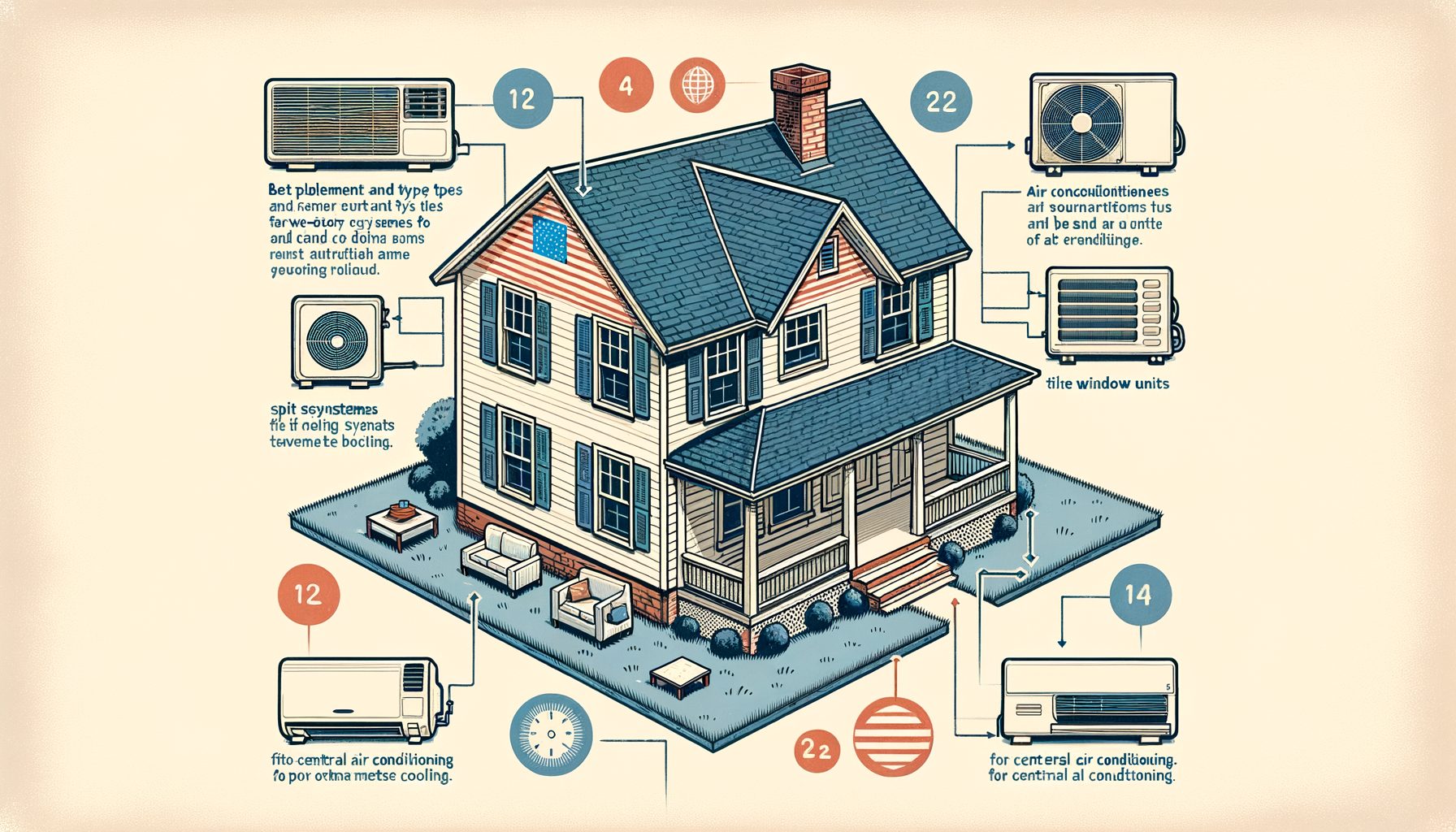
Looking for the best air conditioners for 2-story homes? If your upstairs feels like a sauna while the downstairs is chilly, you are not alone. Two-story houses are notoriously hard to cool evenly. In this guide, you will see why that happens, how to fix it, and which modern systems perform best. Expect clear criteria, real-world tips, and top picks so you can choose confidently and stay comfortable all year.
Why 2-story homes are harder to cool (and how to solve the root causes)
In a two-story home, the most common complaint is a hot upstairs and cool downstairs. Physics plays a big role. Warm air naturally rises, creating a stack effect that makes upper floors hotter. Sun exposure and roof heat amplify the problem, while a single thermostat—often installed on the first floor—turns the system off before the upstairs is truly comfortable.
Second culprit: duct design. Many older homes have supply ducts that deliver more air to the first floor than the second, or they lack sufficient return air upstairs. If you do not have a return grille on the upper floor, your system might struggle to pull warm air out, trapping heat near the ceiling. Leaky ducts make matters worse: air escapes into attics or crawlspaces, reducing airflow to the rooms that need it most. According to ENERGY STAR, typical homes can lose 20–30% of conditioned air through duct leaks, wasting money and comfort. See the official guidance on sealing and insulation at https://www.energystar.gov/campaign/seal_insulate/why_seal_and_insulate.
Capacity and control also matter. A single-stage AC blasts on and off at one speed. It may be “big enough” for the home on paper but cannot modulate airflow and runtime to match room-by-room differences. That means short cycles downstairs and lingering heat upstairs. Variable-speed (inverter) systems, on the other hand, can run longer at low speeds, moving more air to the second floor while controlling humidity—crucial in summer comfort.
Start with a proper load calculation (not a rule-of-thumb per square foot), then follow with duct balancing and an upstairs thermostat or smart sensors. In field audits, I have seen simple steps—like opening or closing branch dampers, sealing ducts with mastic, or adding a dedicated return upstairs—drop second-floor temperatures by 2–4°F. When paired with an inverter system or a zoning upgrade, results improve even more. The takeaway: solve airflow, control, and leakage first, then pick the right equipment to lock in the gains. For foundational guidance, review the U.S. Department of Energy’s overview at https://www.energy.gov/energysaver/central-air-conditioning.
Choosing the right system type and size for a two-story layout
Best-in-class systems for two-story homes share three traits: right-sized capacity, efficient modulation, and smarter control. Start with a Manual J load calculation from a qualified contractor (ACCA standard) rather than relying on square-footage estimates. Two houses with the same floor area can have very different cooling loads due to insulation, window area, orientation, and air leakage. Learn more about ACCA Manual J at https://www.acca.org/standards/technical-manuals.
Consider these system types:
1) Central AC + furnace (split system): A good fit if you already have ducts in decent shape. Look for variable-speed or two-stage options to improve airflow upstairs and manage humidity. Such systems are widely available and serviceable, and they pair well with zoning dampers.
2) Inverter heat pump (ducted): Modern cold-climate heat pumps cool in summer and heat efficiently in winter. They are often quieter, more efficient, and provide longer, gentler cycles than single-stage AC. SEER2 ratings for top models typically range from about 18 to 22+, and HSPF2 can reach the high 8s to 10+. If you want one system for year-round comfort and better energy savings, this is a strong choice.
3) Ductless mini-split (multi-zone): Ideal when the upstairs is underserved by ducts or you want room-by-room control without major remodeling. Multi-zone condensers connect to several indoor heads (wall, floor, or ceiling cassettes). Mini-splits are highly efficient and great at taming hot rooms. They can be a supplemental upgrade to help the upstairs without replacing existing equipment.
Get the size right. Oversized equipment short-cycles, leading to poor humidity control and uneven temperatures. Undersized systems run constantly and still cannot cool upstairs well. Ask for Manual S (equipment selection) and Manual D (duct design) checks alongside Manual J. Finally, prioritize a smart control strategy: zoning with two thermostats or a smart thermostat with remote sensors upstairs can dramatically improve balance. If you live in a cold climate, confirm your heat pump’s low-temperature performance; many cold-climate models maintain capacity below freezing. Reference ENERGY STAR’s Most Efficient list at https://www.energystar.gov/products/most_efficient for vetted high-performance units.
Top picks for 2-story homes in 2025: efficient, quiet, and control-friendly
Below are representative families known for strong performance, service networks, and features that help two-story homes. Real-world efficiency depends on installation quality and ductwork. Use these as starting points to discuss with local pros, and verify model-specific SEER2/HSPF2 ratings on manufacturer or ENERGY STAR listings.
| Type | Example Family | Typical SEER2 | Typical HSPF2 | Capacity Range | Best For | Approx. Installed Cost (USD) | Learn More |
|---|---|---|---|---|---|---|---|
| Variable-Speed Central AC | Carrier Infinity variable-speed | Up to low-20s | N/A | 2–5 tons | Ducted homes needing quiet, humidity control | $10k–$17k | Carrier |
| Ducted Inverter Heat Pump | Trane XV series / American Standard Platinum | High teens to low-20s | ~8.5–10+ | 2–5 tons | Year-round comfort; zoning-friendly | $12k–$20k | Trane |
| Ducted Inverter Heat Pump | Bosch IDS family | High teens to low-20s | ~8.5–9.5 | 2–5 tons | Retrofits; good modulation at a fair price | $10k–$18k | Bosch IDS |
| Multi-Zone Ductless Heat Pump | Mitsubishi Electric Hyper-Heat (multi-zone) | ~20–25+ | ~9–12 | 2–8+ indoor zones | Uneven upstairs; add-on comfort without ducts | $9k–$22k (varies by zones) | Mitsubishi Electric |
| Compact Ducted/Side-Discharge | Daikin Fit | High teens to low-20s | ~9–10 | 2–5 tons | Tight outdoor spaces; inverter comfort | $10k–$18k | Daikin Fit |
Price ranges include equipment and typical installation but vary by region, labor rates, and scope (zoning, ducts, electrical). Efficiency ratings are representative; confirm exact ratings by model and match-up. If your ducts are marginal, consider an inverter heat pump with zoning or a ductless multi-zone to target the upstairs directly. For rebates, check the ENERGY STAR Rebate Finder at https://www.energystar.gov/rebate-finder and your local utility. If you want to dig deeper into efficiency metrics (SEER2/HSPF2) and how they are tested, see the U.S. DOE overview: https://www.energy.gov/energysaver/room-air-conditioners-and-central-ac-efficiency-ratings.
Pro tip: performance is 50% equipment and 50% installation. A mid-tier inverter system with great duct design often beats a flagship model feeding leaky, undersized ducts. Before you upgrade, ask for a duct inspection and static pressure test. If your contractor does not measure, keep shopping.
Zoning, ducts, and smart controls: upgrades that make any unit perform better
Zoning adds motorized dampers and a second thermostat (usually upstairs) so the system can send more conditioned air where it is needed. That change addresses the core problem of a single thermostat downstairs shutting the system off too soon. For many two-story homes, a two-zone retrofit with a variable-speed blower is the sweet spot: longer, lower-speed cycles deliver steady air to the second floor and improve humidity control. Expect a few extra days of install time and a premium in cost, but the comfort payoff is real.
Return air is equally important. If your upstairs lacks a return grille, the system cannot efficiently pull out warm air. Adding one or more returns upstairs often flattens temperature differences by a couple of degrees. Ask your installer to evaluate return sizing and pathways (under-cut doors, transfer grilles, or jump ducts) to ensure air can travel back to the air handler easily.
Seemingly low-glamour upgrades like duct sealing and balancing deliver high-impact results. Sealing with mastic or aerosol methods can reclaim lost airflow, cut energy waste, and reduce dust. After sealing, balancing dampers can be adjusted to direct slightly more supply airflow to the upper floor. ENERGY STAR and many utility field studies repeatedly show double-digit improvements from duct sealing. See duct sealing guidance at https://www.energystar.gov/campaign/seal_insulate/ducts.
Smart controls finish the job. Thermostats with remote sensors can prioritize the hottest rooms at certain times of day. For example, placing a sensor in the main upstairs bedroom and using a comfort schedule in the evening helps the AC run long enough to cool that area properly. Room-by-room control gets even better with mini-splits because each head acts like its own zone. If humidity is a persistent issue, consider systems with enhanced dehumidification modes or a whole-home dehumidifier to keep indoor relative humidity around 45–55%. The combination of zoning, proper returns, sealed ducts, and intelligent control can transform a mediocre system into a top performer without overspending on oversized equipment.
Conclusion and FAQs
Smart comfort in a two-story home is not about buying the biggest unit. It is about picking the right technology and making the house work with it. You started with a clear problem: the upstairs runs hot, the downstairs gets cold, and the thermostat cannot make both happy. Now you know why—stack effect, duct imbalances, and one-size-fits-all control—plus the solutions that actually work. The most reliable path to comfort combines an accurate load calculation, a modulating system (inverter AC or heat pump), and upgrades that improve airflow and control: zoning, proper returns, sealed ducts, and smart sensors.
Use the top-picks table as a shortlist for conversations with local, licensed installers. Ask for Manual J/S/D documentation, static pressure readings, and a duct/return plan. If someone proposes a shortcut based on square footage alone, get another bid. Check available rebates, compare lifecycle costs, and look for long warranties on compressors and parts. Above all, remember that installation quality determines how much of the equipment’s advertised performance you actually feel in your rooms.
Ready to move? Get two to three proposals that include both equipment and airflow fixes, then select the team that proves they will measure, seal, and commission the system—not just set the thermostat and walk away. Your reward will be level temperatures, quieter operation, lower humidity, and lower bills. Make this the summer you stop fighting your house and start enjoying it.
Call to action: shortlist two system types that fit your home, schedule a Manual J–based quote this week, and ask about zoning or an upstairs return. Comfort is a choice—and it starts with the next step you take today. If you could fix one thing first—equipment, ducts, or controls—which would you choose?
Q1: Do I need two systems for a 2-story house? In many cases, no. A single, properly sized inverter system with zoning and good ducts can cool both floors well. Two systems (one per floor) can work, but they cost more to install and maintain. Start by assessing duct returns, sealing, and zoning before deciding if a second system is necessary.
Q2: Is a heat pump better than a traditional AC for two-story homes? Often, yes. A modern inverter heat pump provides precise modulation and long, low-speed runs that improve upstairs airflow and humidity control. In cold climates, choose a cold-climate model verified by ENERGY STAR. If you prefer to keep your furnace, a variable-speed AC paired with zoning is still an excellent option.
Q3: How big should my AC be? Skip square-footage-only sizing. Ask for an ACCA Manual J load calculation. Two similar homes can differ by 30% in cooling load due to insulation, windows, and leakage. Oversizing leads to short cycling and uneven temperatures; right-sizing with good airflow delivers better comfort and lower bills.
Q4: What delivers the fastest comfort improvement upstairs? Add or improve an upstairs return, seal and balance ducts, and use a thermostat with an upstairs sensor. These steps often reduce upstairs temperatures by several degrees. For persistent hot rooms, consider a ductless head upstairs or a full zoning upgrade with a variable-speed system.
Sources:
• U.S. Department of Energy – Central Air Conditioning: https://www.energy.gov/energysaver/central-air-conditioning
• ENERGY STAR – Seal and Insulate: https://www.energystar.gov/campaign/seal_insulate/why_seal_and_insulate
• ENERGY STAR – Most Efficient Products: https://www.energystar.gov/products/most_efficient
• ENERGY STAR – Rebate Finder: https://www.energystar.gov/rebate-finder
• ACCA Manuals (J/S/D) Overview: https://www.acca.org/standards/technical-manuals
• Manufacturer Resources: Carrier – https://www.carrier.com/residential/en/us/ ; Trane – https://www.trane.com/residential ; Bosch IDS – https://www.bosch-thermotechnology.us ; Mitsubishi Electric – https://www.mitsubishicomfort.com ; Daikin Fit – https://daikincomfort.com/products/daikin-fit