
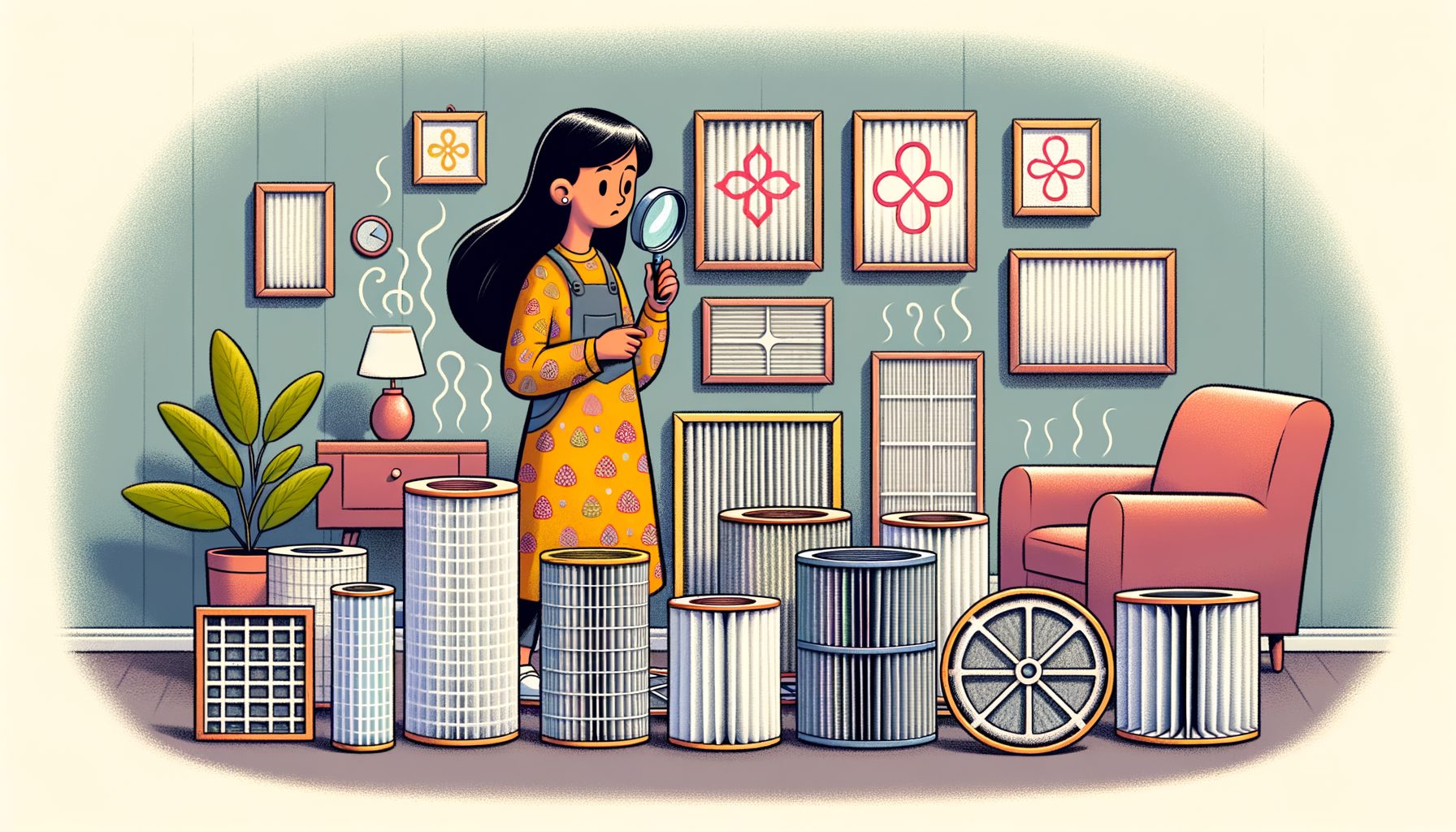
Pick the right AC filter and you’ll clean up your indoor air with minimal effort. Still, many people grab whatever fits and hope for the best. Your home’s air can hide particles from dust, pollen, pets, cooking, and even outdoor smoke. In this guide, you’ll learn exactly how to choose a filter, avoid common mistakes, and balance health, comfort, and energy costs. The steps are simple. The benefits are real. You can start today.
The real problem: why your indoor air isn’t as clean as you think (and how AC filters help)
Indoors, pollutant levels can exceed outdoor levels—especially in tightly sealed homes and apartments. The U.S. Environmental Protection Agency (EPA) estimates people spend about 90% of their time inside, where certain pollutants can reach 2–5 times outdoor concentrations. Everyday sources add up: dust and fabric fibers, pet dander, tracked-in pollen, fine particles from cooking oil and smoke, plus pollution drifting in from traffic or wildfires. Ever seen sunbeams “lit up” with floating specks? That’s a hint of the load your filter is battling.
Your AC (or central HVAC) filter sits in the return air path, where it intercepts part of the airborne particles as air recirculates. Beyond protecting equipment, a higher-grade filter reduces what you breathe—especially fine particles (PM2.5) that can irritate lungs and trigger allergies. There is a trade-off, though. As efficiency rises, resistance to airflow (pressure drop) can go up. Too much resistance—because the filter is overly restrictive or simply clogged—can make the system run longer, burn more electricity, or even freeze the coil in cooling mode. The sweet spot: choose the highest efficiency your system can comfortably move air through, and replace it on time.
Real-life example: In a two-bedroom apartment with a cat and occasional cooking smoke, swapping a basic fiberglass filter for a pleated MERV 11 cut surface dust and eased morning sniffles within two weeks. The fan handled the change, and replacing the filter every 60 days kept airflow strong. The same principle scales to larger homes: right filter, right fit, right schedule.
Decode ratings and materials: MERV vs. MPR vs. FPR, filter thickness, and fit
Labels can confuse, so here’s the short take. MERV (Minimum Efficiency Reporting Value), the ASHRAE standard, measures how well a filter captures particles from 0.3 to 10 micrometers. You might also see MPR (3M’s Microparticle Performance Rating) or FPR (Home Depot’s scale). They aren’t identical but aim to describe similar performance. Quick cross-checks: MERV 8 ≈ MPR 600; MERV 11 ≈ MPR 1000–1200; MERV 13 ≈ MPR 1500–1900. When uncertain, lean on MERV and your HVAC manufacturer’s guidance.
Construction matters as much as the number. Pleated filters offer more surface area than cheap fiberglass pads, boosting capture and extending service life at the same size. Depth also affects lifespan and airflow. Common 1-inch (≈25 mm) filters are inexpensive; 2-inch (≈50 mm) and 4-inch (≈100 mm) media filters add depth for lower pressure drop and longer intervals between changes. Match the exact size printed on your current filter or return grille. For example, 20 × 20 × 1 inches is roughly 508 × 508 × 25 mm. A loose fit leaks unfiltered air; an oversize won’t seat.
Use the table below to compare typical tiers. “Relative pressure drop” is a general guide—actual numbers vary by brand and airflow. Always check your system manual for maximum recommended MERV and thickness.
| MERV Range | Typical Particles Captured | Common Use | Relative Pressure Drop | Notes |
|---|---|---|---|---|
| 1–4 | Lint, large dust, carpet fibers | Basic equipment protection | Low | Minimal health benefit |
| 5–8 | Dust, pet dander, mold spores | General home use | Low–Moderate | Good baseline for most systems |
| 9–12 | Fine dust, smaller allergens | Homes with pets/allergies | Moderate | Stronger filtration; check airflow |
| 13–16 | PM2.5, smoke particles, bacteria | Health-focused homes, urban smoke | Moderate–Higher | Best if system supports it |
Keep in mind: HEPA is a separate standard (99.97% at 0.3 microns). Most residential central systems aren’t designed for true HEPA filters due to high pressure drop. Need HEPA-level cleaning? Use a standalone room purifier alongside a high-MERV HVAC filter. For rating references, see ASHRAE’s guidance on MERV and particle size ranges: https://www.ashrae.org/technical-resources/filtration-and-disinfection.
Match the right AC filter to your life: allergies, pets, smoke, and city air
Start with your goals. If equipment protection and big-dust control are the priorities, a MERV 8 pleated filter is a strong, affordable baseline. If health tops the list—cutting allergens or fine smoke—aim higher, ideally MERV 11–13, provided your system can handle it. The scenarios below can help you decide.
Have allergies or asthma? Choose at least MERV 11; MERV 13 captures smaller allergens and more fine particulate. Pair filtration with source control: wash bedding weekly at 60°C, vacuum using a HEPA machine, and keep indoor humidity around 40–50% to slow mold and dust mites. Many households report fewer morning symptoms after moving from MERV 8 to MERV 13 with on-time changes.
Share your home with pets? Pet dander skews small, so MERV 9–11 typically outperforms MERV 8. Shedding increases filter load, meaning more frequent changes—about every 30–60 days for 1-inch filters. Regular grooming near an open window or balcony helps, too.
Live with wildfire smoke or urban pollution? Fine smoke particles (PM2.5) call for higher capture. Use MERV 13 if your system allows. During smoke events, set the fan to “On” or “Circulate” to keep air moving through the filter, and shut windows. A portable HEPA purifier in bedrooms makes a strong supplement. Keep an eye on local air quality and follow guidance from your local authority or the WHO.
Renting or using ductless mini-splits or window ACs? Many mini-splits and window units include washable mesh screens that catch lint but not fine particles. Keep the screens clean and add a separate HEPA room purifier. Avoid DIY “upgrades” that restrict airflow in small units. If your central system has a media cabinet, a 2–4 inch high-MERV filter can combine high efficiency with lower pressure drop and longer life.
Practical checklist to decide quickly:
– Confirm your system’s maximum MERV and filter thickness in the manual or on the blower door.
– If health or smoke is a concern and your system supports it, choose MERV 13. Otherwise, pick MERV 11.
– No special concerns? A pleated MERV 8 is a reliable baseline.
– Buy the exact size and ensure a snug fit. No gaps.
– If airflow weakens or the system sounds strained, step down one MERV level or switch to a deeper media filter of similar rating to reduce resistance.
Install, maintain, and save: simple steps for cleaner air and lower energy bills
Good filtration is a habit, not a one-time purchase. A clean, properly installed filter improves air quality and helps the system run efficiently. ENERGY STAR notes that replacing a dirty filter can cut energy use and reduce failures, and many homes see less dust and better comfort once a routine is in place.
How to install correctly:
– Turn off power to the system.
– Slide out the old filter and note the airflow direction arrows.
– Check the slot or grille for dust; vacuum if reachable.
– Insert the new filter with arrows pointing toward the blower (from return to supply).
– Verify a snug fit. If slightly loose, a thin foam gasket can reduce bypass air.
– Write the installation date on the frame.
How often to replace:
– 1-inch pleated MERV 8: every 60–90 days in typical use.
– 1-inch MERV 11–13: every 45–60 days (higher capture loads faster).
– 2–4 inch media filters: every 3–6 months, sometimes up to 9 months in low-dust homes.
– With pets, smokers, nearby construction, or wildfire smoke: change more often.
Smart tip: Set calendar reminders or use a free app. During heavy use, check monthly. If the filter looks loaded or airflow feels weak at vents, replace early. Watch for slow cooling, unusual fan noise, icing on the refrigerant line, or rising electricity bills—those are warning signs.
Budgeting and value:
– MERV 8 (1-inch) usually costs less but may need more frequent changes to manage allergens.
– MERV 11–13 costs more per filter yet can reduce dusting and symptoms while removing the finer particles that matter most for health.
– Thicker media filters carry a higher upfront price but last longer and often have lower pressure drop, which is easier on the blower and can offset energy costs.
For official maintenance tips, see ENERGY STAR’s guidance: https://www.energystar.gov/products/ask-the-expert/air-filters-101 and the EPA’s indoor air resources: https://www.epa.gov/indoor-air-quality-iaq.
Advanced options and common mistakes: washable electrostatic, carbon, UV, and myths
Washable “electrostatic” filters can seem attractive—cost-effective and eco-friendly. In practice, many models catch larger particles but underperform on fine particles compared with quality pleated filters. They also demand disciplined cleaning. If one is chosen, verify independent test data, clean it thoroughly, and dry it completely to avoid mold or odor.
Activated carbon layers help with odors and some gases (like cooking smells), but carbon alone won’t trap fine particles. Combo filters that pair pleated media with carbon can cut odors while capturing particulates. Replace when odor control fades, even if the filter still looks clean.
Electronic air cleaners (ionizers or ozone-producing devices) are best avoided unless certified to emit no ozone. Ozone is a lung irritant. If you consider one, confirm it’s on the California Air Resources Board (CARB) certified list and avoid any product that intentionally generates ozone. Safer complements include portable HEPA cleaners sized to the room and smart ventilation when outdoor air is healthy.
UV lights in ducts can suppress biological growth on coils, but filtration is still required. Dust and smoke particles aren’t removed by UV. If you add UV, keep using an appropriate MERV filter and replace it on schedule.
Common myths to avoid:
– “Higher MERV always hurts efficiency.” Not necessarily. A well-designed MERV 13 media filter can have similar—or even lower—pressure drop than a cheap 1-inch MERV 8 as it loads. Fit, thickness, and replacement timing matter most.
– “HEPA is always best.” For capture, yes—but most residential systems aren’t built for HEPA. Use the highest MERV your system supports and supplement with a room HEPA purifier.
– “If the filter looks clean, it’s fine.” Many fine particles are invisible. Follow a schedule and your system’s performance cues, not just appearances.
For safety and standards, consult ASHRAE filtration guidance: https://www.ashrae.org/technical-resources/filtration-and-disinfection and CARB’s certified air cleaner list: https://ww2.arb.ca.gov/list-carb-certified-air-cleaning-devices.
Q&A: quick answers to common AC filter questions
Q: What MERV rating should I choose for my home?
A: For most homes, start with a pleated MERV 8. If you’re dealing with allergies, pets, or urban smoke, step up to MERV 11–13—provided your system is rated for it. When in doubt, check the HVAC manual or ask a technician about the maximum recommended MERV.
Q: How often should I change my AC filter?
A: Plan on every 60–90 days for a 1-inch MERV 8, 45–60 days for a 1-inch MERV 11–13, and every 3–6 months for 2–4 inch media filters. Replace sooner if you have pets, heavy dust, or smoke events, and anytime airflow weakens.
Q: Can I install a HEPA filter in my central AC?
A: Usually not. Most residential systems can’t handle HEPA’s high pressure drop. Instead, use the highest MERV your system supports (ideally MERV 13) and add a portable HEPA purifier in bedrooms or other high-use rooms.
Q: Are washable filters worth it?
A: Only with solid third-party test data and careful maintenance. Many washable filters lag behind pleated options on fine particles. If you use one, clean and dry it thoroughly to prevent mold and odors.
Conclusion: your next steps to cleaner air and a healthier home
Cleaner indoor air is closer than it seems. You now know why indoor air often needs help, how filtration actually works, and how to make sense of ratings like MERV, MPR, and FPR. You’ve seen how to match a filter to your situation—whether allergies, pets, wildfire smoke, or city pollution—and how to install and maintain it for better health and energy performance. Myths, add-ons like carbon layers, and room HEPA purifiers? Covered.
Time to act. Measure your current filter, check the manual for maximum MERV and thickness, and pick the highest-efficiency pleated filter your system supports—ideally MERV 13. If that’s not feasible, choose MERV 11 or a deeper media filter to balance airflow with capture. Set a monthly reminder to check the filter and replace it on schedule, especially during peak seasons or smoke events. Using a mini-split or window unit? Keep the mesh screen clean and pair it with a dedicated room HEPA purifier for bedrooms and living areas.
Take five minutes today: open the return grille, read the size, and order a box of quality filters so you never run out. If airflow or sizing is uncertain, ask a local HVAC pro to confirm the best MERV and filter depth for your system. Healthier air means fewer irritants in your lungs, less dust on surfaces, and equipment that runs smoothly.
You deserve air that feels as fresh as it looks. Start with one small upgrade—your next filter—and build the habit from there. What’s the first change you’ll make today to breathe easier at home?
Outbound resources:
– EPA Indoor Air Quality: https://www.epa.gov/indoor-air-quality-iaq
– ASHRAE Filtration and Disinfection: https://www.ashrae.org/technical-resources/filtration-and-disinfection
– ENERGY STAR Air Filters 101: https://www.energystar.gov/products/ask-the-expert/air-filters-101
– WHO Air Quality Guidelines: https://www.who.int/health-topics/air-pollution
– CARB Certified Air Cleaners (avoid ozone): https://ww2.arb.ca.gov/list-carb-certified-air-cleaning-devices
Sources:
– U.S. EPA, Indoor Air Quality Basics: https://www.epa.gov/indoor-air-quality-iaq/inside-story-guide-indoor-air-quality
– ASHRAE Standard 52.2 and MERV Overview: https://www.ashrae.org/technical-resources/filtration-and-disinfection
– ENERGY STAR, HVAC Filter Maintenance: https://www.energystar.gov/products/ask-the-expert/air-filters-101
– WHO, Ambient (Outdoor) Air Pollution and Health (context for PM2.5): https://www.who.int/news-room/fact-sheets/detail/ambient-(outdoor)-air-pollution