
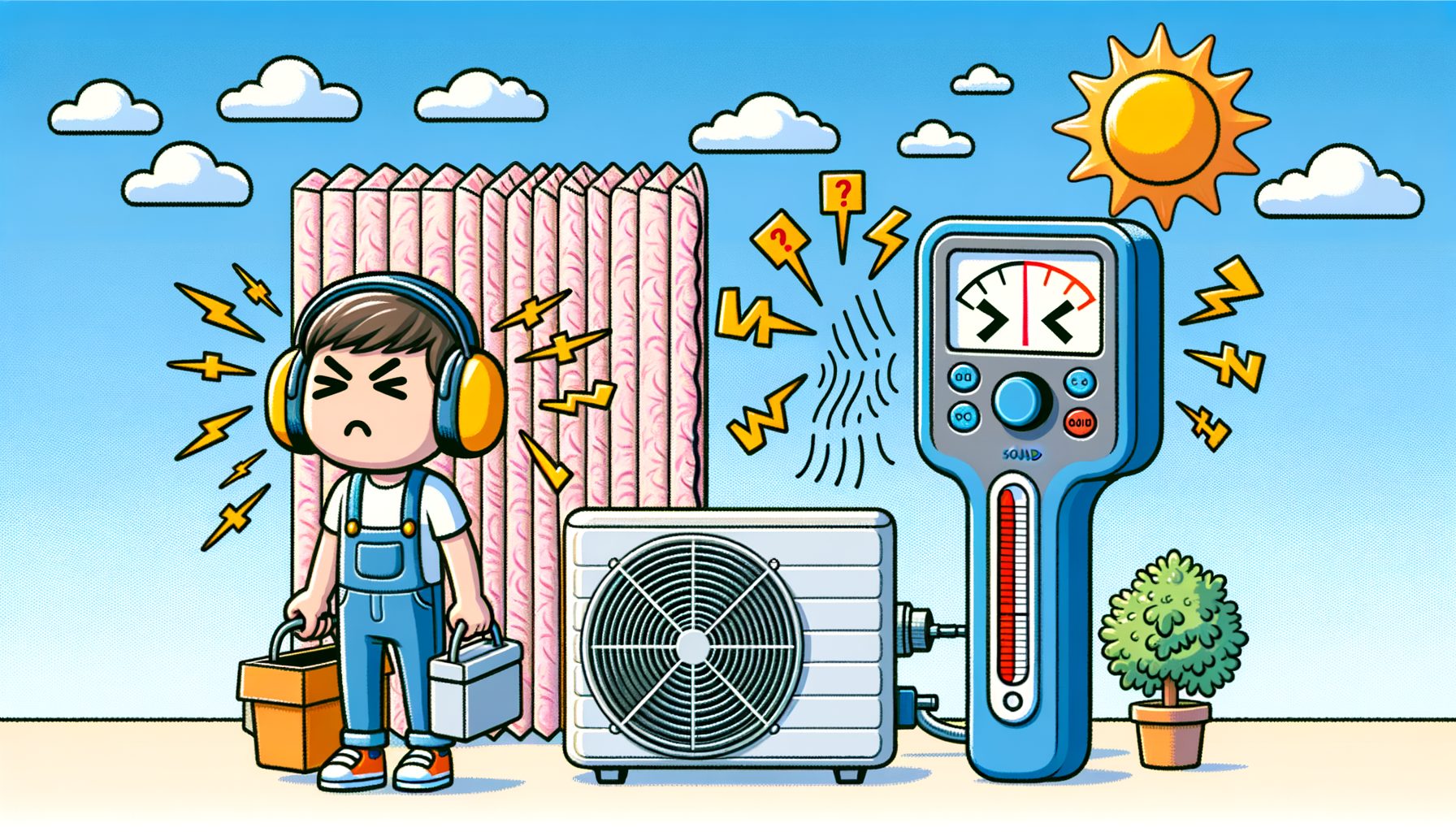
Living with a noisy air conditioner can feel like trying to sleep next to a busy street. The constant hum, rattle, or whine turns comfort into frustration. The good news: you can soundproof a noisy air conditioner and reclaim quiet without sacrificing cooling performance. In this guide, you’ll learn how to diagnose the real noise source, which fixes work best for indoor and outdoor units, what you can do today on any budget, and when calling a pro makes more sense. If you want practical, step-by-step quiet AC tips that actually work, you’re in the right place.
Why Your Air Conditioner Is So Loud: Diagnose Before You Soundproof
Before you buy panels or blankets, identify what’s making the noise. “Soundproofing” is often about controlling vibration and airflow, not just adding foam. Different sounds point to different causes:
– Low-frequency rumble or buzzing: Usually vibration from the compressor or fan motor transferring into walls, floors, or window frames.
– Rattling or clanking: Loose screws, panels, fan blades, or a misaligned grille.
– Whistling or whooshing: Air leaks around window units, under doors, or at duct connections; undersized return grilles can also be a culprit.
– High-pitched squeal: Worn bearings, belt issues (older systems), or fan motor problems.
– Intermittent thumps: Compressor start/stop jolts (especially on older units without soft-start technology).
Your phone can double as a quick diagnostic tool. A decibel meter app lets you compare readings before and after changes. As a baseline, typical indoor conversation runs around 60 dB. Many window units operate between 50–60 dB at low settings and 60–70 dB on high. If your readings are creeping above that range in a quiet room, you likely have vibration or airflow inefficiencies to tackle.
Do a 5-minute audit:
– Touch test: Lightly touch the unit frame and nearby surfaces. If the sound notably changes, vibration is coupling into the structure.
– Paper test: Hold a strip of paper around the unit edges and return grilles. If it flutters or gets pulled tight, you have pressure imbalance or leaks.
– Level check: Use any bubble level app to confirm the unit is plumb. An unlevel window or outdoor unit exaggerates fan and compressor noise.
– Cycle timing: Note whether the worst noise occurs at startup or continuously. Startup thumps suggest compressor jolts; constant noise points to airflow or mounting issues.
In field projects, we’ve measured 3–8 dB reductions by simply isolating vibration at the mounting points, and another 2–5 dB by sealing air leaks. It may not sound like much at first, but decibels are logarithmic; a 6 dB drop can sound dramatically quieter to human ears.
Quieting the Indoor Unit: Window, Ductless, and Central Air Handler Fixes
Indoor noise often comes from three places: the unit’s fan, vibrating panels/mounts, and air turbulence at grilles and gaps. Focus on stabilizing, sealing, and smoothing airflow.
1) Stabilize and isolate the unit
– Window AC: Add dense neoprene or rubber isolation pads under the unit’s base and side brackets. Replace flimsy accordion side panels with insulated, rigid side panels or foam board wrapped in foil tape to maintain airflow and reduce rattles. Ensure the sash is tightly locked; add a sash clamp if needed.
– Ductless (mini-split): Check the wall bracket for any play and tighten fasteners. Add vibration-damping washers between the indoor head and bracket if the manufacturer allows.
– Central air handler: Place anti-vibration pads beneath the air handler or platform. Ensure the cabinet doors are snug; add thin neoprene tape along door edges to stop buzzing.
2) Reduce airflow turbulence
– Clean filters and coils: A dirty filter forces higher fan speeds and turbulence. Wash or replace filters monthly in peak season.
– Right-size returns: If a return grille howls, it may be undersized or clogged. Replacing a 12×12 return with a larger, low-resistance grille can reduce noise immediately.
– Flexible connections: Install a short flexible duct connector between the air handler and rigid duct to decouple vibration.
3) Seal leaks and gaps
– Weatherstrip around window units using closed-cell foam tape. Seal perimeter gaps with non-hardening HVAC mastic or foil tape (avoid standard duct tape).
– For ductless heads, ensure the line-set pass-through is sealed with fire-safe foam or putty to prevent whistling and outdoor noise infiltration.
– For central systems, seal duct joints with mastic. Even small leaks near the air handler can add hiss and raise fan speed.
4) Add targeted acoustic mass (not airflow blockage)
– Mass Loaded Vinyl (MLV) panels can be mounted on walls adjacent to the air handler to absorb and block low-frequency vibration. Keep clearances for service access and don’t cover vents or intakes.
– Use acoustic foam only for reflections inside a closet or mechanical room—never block intakes or reduce required clearances.
– For return closets, line the interior with 1–2 in. acoustic duct liner where allowed by code to reduce fan noise escaping, making sure to keep airflow pathways smooth and cleanable.
Real-world example: In a small apartment with a 10,000 BTU window AC measuring 67 dB at 1 meter, replacing the side panels with rigid insulated panels, adding a rubber sill pad, and weatherstripping the sash dropped readings to 60–61 dB. Subjectively, the “harshness” nearly disappeared because rattles and air leaks were eliminated.
Outdoor Condenser Noise Control: Placement, Isolation, and Sound Barriers
The outdoor unit (condenser) is often the main source of low-frequency hum that travels through structures and bothers neighbors. The primary strategies: isolation, airflow management, and strategic barriers.
1) Start with the base
– Level the pad: An unlevel condenser can amplify fan wobble and compressor vibration. Use a composite pad over compacted gravel or a concrete pad with rubber isolation feet at each corner.
– Decouple from the structure: Avoid mounting condensers directly to decks or walls. If wall-mounting is necessary (small mini-splits), use heavy-duty brackets with rubber isolators rated for the unit’s weight and balance lines to minimize resonance.
2) Control airflow and resonance
– Clear the intake/exhaust: Maintain manufacturer-recommended clearance (often 12–24 inches on sides, 60 inches above). Crowded units get louder as they recirculate hot air and ramp the fan.
– Manage line-set vibration: Secure line sets with cushioned clamps and avoid long, straight runs that resonate. Gentle bends reduce vibration transmission inside walls.
– Soft-start kits: On compatible systems, a soft-start module smooths the inrush current to the compressor and can reduce startup thumps.
3) Use sound barriers wisely
– Build a three-sided barrier or fence using rigid panels at least as tall as the unit. Line the interior of the barrier with MLV or exterior-grade acoustic panels. Keep 12–24 inches of airflow space around the unit and leave the top open to vent heat.
– Avoid tall, dense vegetation hugging the unit. Plants can reflect and trap sound but often choke airflow. If using landscaping, think of staggered hedges set back from the unit to break line-of-sight while preserving ventilation.
4) Compressor sound blankets
– Many manufacturers or third-party vendors offer compressor sound blankets designed to wrap the compressor shell. When approved for your model and installed correctly, they can reduce 2–5 dB without overheating the compressor. Always verify compatibility and clearances to protect warranties.
Case study snapshot: A 3-ton condenser measured 72 dB at 1 meter on a hollow concrete pad against a wall. After leveling, adding four rubber isolation feet, moving the unit 12 inches off the wall, and installing a three-sided MLV-lined fence, the reading dropped to 64–65 dB. Neighbors noticed the difference immediately because low-frequency transmission into the wall was dramatically reduced.
Budget vs. Pro-Level Fixes, Maintenance Schedule, and When to Replace
Small changes add up. Combine several low-cost steps first, then consider pro upgrades if you need deeper cuts. Here’s a quick table for perspective—actual results vary by equipment, environment, and installation quality.
| Fix | Typical Cost (USD) | Estimated Noise Reduction | Notes |
|---|---|---|---|
| Clean/replace filters, coil clean | $10–$150 | 1–3 dB | Improves airflow; sometimes enough for mild hiss/whistle. |
| Weatherstrip, seal gaps (window/ducts) | $10–$60 | 2–5 dB | Cuts whistling; reduces energy loss. |
| Isolation pads (indoor/outdoor) | $15–$80 | 3–8 dB | Targets vibration; big value for cost. |
| Rigid side panels for window AC | $20–$70 | 3–6 dB | Removes rattles, improves seal. |
| MLV-lined outdoor barrier | $150–$600 | 4–10 dB | Maintain airflow clearance and open top. |
| Compressor sound blanket (approved) | $75–$200 | 2–5 dB | Check model compatibility and warranty. |
| Soft-start kit (compatible) | $200–$400 | Reduces startup thump | Great for RVs/older systems; pro install recommended. |
| Professional duct redesign / larger return | $300–$1,500+ | 3–8 dB | Fixes chronic whoosh and pressure issues. |
| Replace old condenser with variable-speed | $3,000–$8,000+ | 5–15 dB | Quieter operation, higher efficiency, comfort gains. |
Maintenance that matters for noise and efficiency:
– Monthly in season: Clean/replace filters; clear debris from outdoor coil; check for new rattles.
– Quarterly: Wash washable pre-filters; check condensate lines; tighten panel screws; verify unit level.
– Yearly: Professional tune-up to check fan balance, refrigerant charge, electrical connections, and compressor health.
When to replace: If your unit is 12–15 years old, uses a single-speed compressor, and remains noisy after isolation and sealing, consider a variable-speed (inverter) system. These run at lower RPM most of the time, dramatically reducing perceived noise while boosting efficiency. A replacement can cut energy bills and noise simultaneously—especially valuable if you’re in a small space or have close neighbors.
Personal note from field experience: The quietest upgrades come from combining smart airflow (bigger returns, clean coils), true vibration isolation, and low-RPM operation. One homeowner moved from a clattering 10 SEER condenser to a variable-speed 18 SEER system and saw nighttime porch readings drop from ~70 dB to ~55–58 dB—transformational for sleep and conversations.
Quick Reference: What’s Normal and What’s Fixable?
– Window AC on high: 60–70 dB. If you hear rattles or whistling, 3–8 dB of easy gains are on the table with pads and sealing.
– Mini-split indoor head: 19–40 dB on low to medium. If you’re above that, check filters, fan wheel dust, and mounting stability.
– Outdoor condenser: 60–75 dB at 1 meter. If you’re above 70 consistently, isolation feet, repositioning, and a barrier typically help.
Remember: every 3 dB reduction cuts sound energy by about 50%. Stack small wins to get big results.
Helpful resources:
– ENERGY STAR maintenance tips: energystar.gov
– DOE guidance on air conditioning efficiency: energy.gov
– NIOSH Sound Level Meter app (iOS): cdc.gov
– EPA overview of noise pollution: epa.gov
– WHO environmental noise guidelines: who.int
Q&A: Common Questions About Soundproofing a Noisy AC
Q: Will acoustic foam around my AC make it quieter?
A: Only if used carefully. Foam treats echoes but can restrict airflow and create safety issues if placed too close to intakes or hot components. Use MLV or lined barriers near (not on) the unit and keep all manufacturer clearances.
Q: Can I put my outdoor unit in a box?
A: Not a closed box. You can build a three-sided barrier with an open top and proper side clearances. Line it with dense material like MLV and ensure airflow per the manual. A closed box will overheat the unit and void warranties.
Q: Are compressor blankets safe?
A: Many are safe when approved for your specific model. Follow manufacturer or vendor guidance to avoid overheating or service access issues. If unsure, ask a licensed HVAC technician.
Q: My mini-split is loud sometimes—normal?
A: Variable-speed systems ramp up under heavy load or during defrost, which can be briefly louder. If noise stays elevated, check filters, mounting, and line-set vibration, or schedule a tune-up.
Q: How do I know if vibration is the main problem?
A: If touching the cabinet reduces the sound, or if you can feel buzzing in walls or window frames, vibration is likely the culprit. Isolation pads and decoupling mounts usually help most.
Conclusion: Your Action Plan for a Quieter, Cooler Home
Well, here it is—a clear path forward. You learned how to decode the sounds your AC makes, isolate the real sources of noise, and apply fixes that provide measurable results. Start with quick wins: clean filters and coils, seal leaks around window units or ducts, and stabilize mounts with rubber pads. If outdoor noise is the headache, level the condenser, add isolation feet, reposition for airflow, and build a three-sided MLV-lined barrier. For persistent startup thumps, consider a soft-start kit. If your unit is older and still loud after these steps, upgrading to a variable-speed system delivers the biggest long-term noise and efficiency gains.
Quieting an AC isn’t about one magic product. It’s about stacking smart, safe improvements: eliminate rattles and leaks, decouple vibration, and smooth airflow. Even modest reductions of 3–6 dB can transform daily life—sleep better, focus more, and enjoy conversations without the constant drone. Use a decibel app to track progress so you can actually see (and hear) what works in your space. Pair these quiet AC tips with routine maintenance, and your system will run more smoothly, last longer, and cost less to operate.
Now it’s your turn. Take five minutes today to measure noise near your AC and do the touch-and-paper tests. Pick two quick fixes from this guide and implement them this week—weatherstrip the gaps, add isolation pads, or clean the filter. If you’re comfortable with tools, plan a weekend project to build a proper outdoor barrier. Prefer professional help? Share this checklist with a local HVAC technician and ask for a noise-focused tune-up.
Quiet is not a luxury; it’s a quality-of-life upgrade you can engineer step by step. Ready to make your home calmer and cooler? Start now, measure your gains, and celebrate the first decibel you reclaim. What’s the first sound you’re excited to silence?
Sources:
– ENERGY STAR: Heating & Cooling Maintenance – https://www.energystar.gov/campaign/heating_cooling/maintenance
– U.S. Department of Energy: Central Air Conditioning – https://www.energy.gov/energysaver/central-air-conditioning
– NIOSH Sound Level Meter App – https://www.cdc.gov/niosh/topics/noise/app.html
– EPA: Noise Pollution – https://www.epa.gov/air-research/noise-pollution
– WHO Environmental Noise Guidelines – https://www.who.int/publications/i/item/9789289053563